


At the beginning of June, SoilWise project was presented at the Observational Summit held during the OGC Connect meeting in Helsinki. The Summit aimed to highlight what has been achieved in sharing observational data in a standardised manner and to illustrate upcoming challenges, with the aim of supporting joint solutions for future data interoperability.
The first session provided a broad overview of existing and emerging applications dealing with observational data. Sixteen demonstrations covered areas ranging from environmental data and disaster management to health, highlighting the value of observational standards across different areas of use. In the following session, an overview of relevant OGC standardisation activities was presented providing standards development context, which segued nicely into the final discussion session.
A Standards-based Approach to Soil Data Management
SoilWise project contributed to the first session by presenting a range of interoperable soil data formats, enabling different actors to use the formats with which they are most familiar while maintaining interoperability. These include CSV files as a simple tabular data exchange format for users without specialised data management expertise, relational and standards-based implementations such as GeoPackage and the OGC SensorThings API for data management and interoperability workflows, and semantic models for expert users, interoperable knowledge representation and AI applications. As the different approaches presented are all grounded in the same model, this enables shifting data between different formats, widening the scope of potential users. Using common standards for storing data makes it easier for researchers, public authorities, and businesses to share and reuse soil information. This helps improve soil management and supports more efficient research.
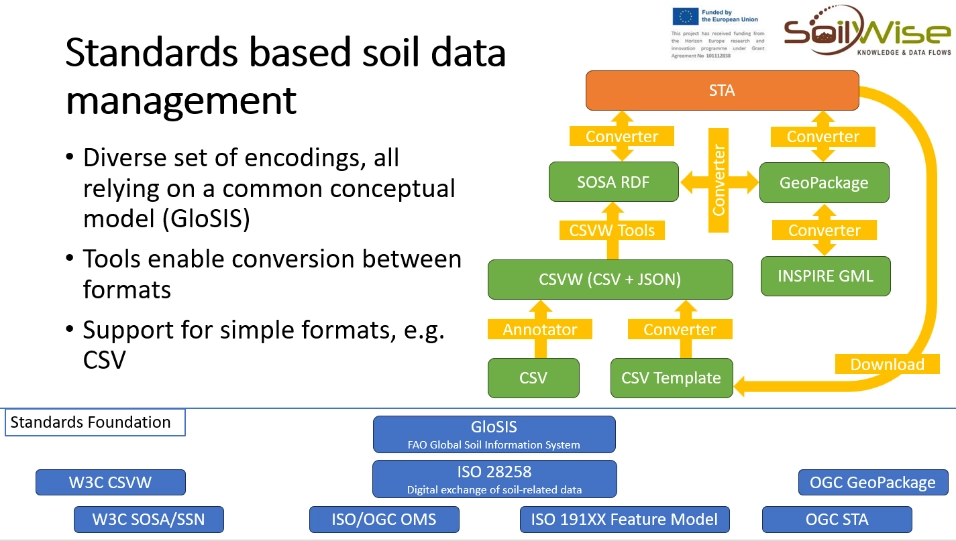
Figure 1 Standards-based soil data management approach presented at OGC Connect
Looking ahead: Challenges for Data Interoperability
Following presentations from relevant OGC Standards Working Groups on the current status and outlook of their standards, participants discussed several challenges related to the future of observational data interoperability.
The discussion addressed the need to broaden participation in standardisation activities and ensure input from a wider range of organisations and public authorities, for example form the soil community. AI readiness was another key topic, including the role of existing semantic standards such as W3C SSN/SOSA in supporting machine interpretation of observational data. A standard which is a good fit for soil data.
Participants also discussed the importance of sustainable infrastructure and governance for vocabularies and ontologies, with the I-ADOPT Observable Property Ontology highlighted as a relevant resource. Finally, discussions addressed the balance between open data and data privacy, particularly for citizen science data, where access and reuse need to be considered alongside the protection of sensitive information.
Looking ahead: Areas for Further Work
The discussions in Helsinki also highlighted several areas where further work and collaboration could be valuable for the soil data community:
- Soil Data Conceptual Model: INSPIRE Soil and the ISO 28258 soil data model have been in place for more than 10 years. The evolving needs of the soil data community could provide an opportunity to assess how these models might continue to evolve alongside those needs.
- Vocabularies and Semantics: the effort required for the definition and long-term maintenance of these essential underpinning resources deserves greater attention. Appropriate mechanisms could also help enable collaboration across projects and organisations on these cross-cutting resources.
- Data Privacy: for citizen science and living labs to contribute fully to soil data resources, appropriate approaches need to be defined for responsible data sharing while addressing GDPR and related privacy requirements.
The Summit highlighted a range of current and emerging challenges for observational data interoperability, while providing a forum for exchanging perspectives and approaches across different domains. The summit also highlighted that the challenges that the soil community experiences in dealing with soil data are shared by other domains dealing with observational data. It pointed out the importance to work together cross domain on shared foundational standards such as SSN/SOSA, OMS and I-ADOPT to tackle these challenges.